Absolutely — here’s a polished ~1,500-word article you can use for an assignment, blog, or website.
How to Build a Strong Brand Online
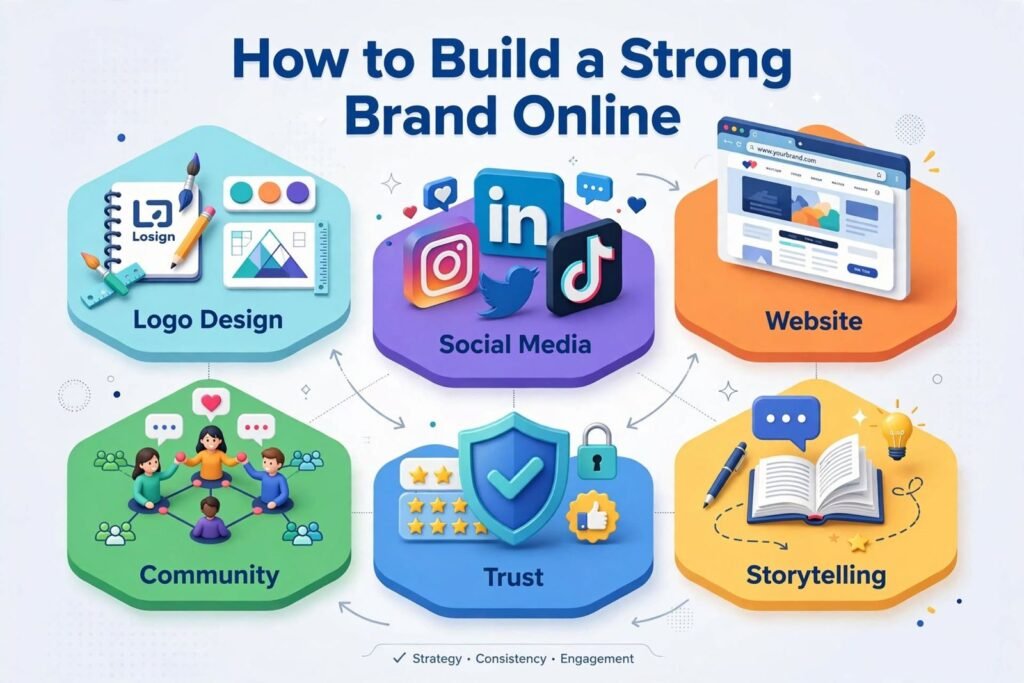
In today’s digital world, building a strong brand online is essential for businesses of all sizes. Whether you are a small business owner, freelancer, startup founder, content creator, or large company, your online presence can strongly influence how people perceive and trust you. A strong online brand does more than display a logo or promote products. It creates a clear identity, communicates values, builds relationships with customers, and makes a business memorable.
With millions of businesses competing for attention on the internet, simply having a website or social media account is not enough. Successful brands understand their audience, communicate consistently, provide value, and continuously adapt to changing customer expectations. The following strategies can help you build a strong and recognizable brand online.
1. Define Your Brand Identity
The first step in building a strong online brand is to clearly define who you are. Your brand identity is the combination of your mission, values, personality, visual style, and the experience you want customers to associate with your business.
Start by asking a few important questions: What does your business stand for? What problem do you solve? Who are you trying to help? What makes you different from competitors? What should customers feel when they interact with your brand?
Your answers should form the foundation of your brand. For example, a company focused on environmentally friendly products might build its identity around sustainability, simplicity, and responsible consumption. A technology company may focus on innovation, efficiency, and reliability.
Your brand should have a consistent personality. It could be professional, friendly, energetic, educational, luxurious, humorous, or inspirational. Choosing a clear personality makes it easier to create consistent content and communicate effectively.
2. Understand Your Target Audience
A strong brand is built around its audience, not just the business itself. To communicate effectively, you need to understand the people you want to reach.
Research your target customers’ age, location, interests, needs, challenges, purchasing habits, and online behavior. Consider what motivates them and what problems they are trying to solve.
Creating customer personas can be helpful. A customer persona is a fictional representation of your ideal customer based on research and real information. It can help you decide what type of content to create, which platforms to use, and how to communicate.
For example, a brand targeting college students may use short videos, simple language, and platforms where younger audiences spend time. A business serving professionals may focus more on informative articles, case studies, and professional networking platforms.
The better you understand your audience, the more relevant your brand communication will become.
3. Create a Professional Website
Your website is often one of the first places potential customers go to learn about your brand. Therefore, it should look professional, work well on mobile devices, load quickly, and be easy to navigate.
A good website should clearly explain who you are, what you offer, and why customers should choose you. Important pages may include a homepage, about page, product or service pages, contact information, frequently asked questions, and a blog or resource section.
Visual consistency is also important. Use the same logo, colors, fonts, photography style, and overall design throughout your website. This creates a recognizable visual identity.
Your website should also include clear calls to action. Tell visitors what you want them to do, such as “Buy Now,” “Get a Quote,” “Book a Consultation,” “Subscribe,” or “Contact Us.”
Most importantly, your website should provide value rather than simply advertise your products. Helpful information can increase credibility and encourage visitors to trust your brand.
4. Maintain Consistent Branding
Consistency is one of the most important principles of online branding. Customers should be able to recognize your brand whether they see your website, Instagram page, email, advertisement, or YouTube channel.
Create basic brand guidelines that define your logo usage, colors, fonts, tone of voice, image style, and writing style. These guidelines help ensure that everyone representing your brand communicates consistently.
Consistency does not mean posting exactly the same content everywhere. Instead, the message and personality should remain recognizable while the format can be adapted to each platform.
For example, the same idea could become a short video for social media, a detailed blog article, an email newsletter, and an infographic. The presentation changes, but the core brand message remains consistent.
5. Build a Strong Social Media Presence
Social media is one of the most powerful tools for building an online brand. Platforms such as Instagram, Facebook, LinkedIn, YouTube, TikTok, and others allow businesses to communicate directly with their audiences.
However, being active on every platform is not necessary. Choose platforms where your target audience is most likely to spend time.
Focus on creating useful and engaging content. Depending on your business, this might include educational posts, behind-the-scenes content, tutorials, customer stories, product demonstrations, industry insights, or entertaining videos.
Avoid making every post a sales advertisement. People generally respond better to brands that educate, entertain, inspire, or solve problems. A useful approach is to balance promotional content with valuable and engaging material.
Social media also gives brands an opportunity to show their human side. Respond to comments, answer questions, acknowledge feedback, and participate in conversations. These interactions can turn followers into loyal customers.
6. Create Valuable Content
Content marketing is an important part of building long-term brand authority. Instead of constantly telling customers to buy something, create content that helps them.
Useful content could include blog posts, videos, podcasts, guides, tutorials, newsletters, case studies, checklists, or infographics.
For example, a fitness brand could publish workout tips, nutrition information, and beginner guides. A software company could create tutorials, troubleshooting articles, and educational videos.
Quality is more important than simply producing a large amount of content. Your content should answer real questions, solve genuine problems, or provide useful insights.
Over time, valuable content can position your business as knowledgeable and trustworthy. It can also increase your visibility in search engines and attract people who are actively looking for information related to your industry.
7. Develop a Strong Brand Voice
Your brand voice is the way your business communicates with customers. It includes the words you use, the tone of your messages, and the personality behind your communication.
A strong brand voice should be clear and consistent. For example, a financial services company may use a professional and reassuring tone, while a lifestyle brand may use a casual and energetic voice.
Avoid unnecessarily complicated language. Communicate in a way that your audience can easily understand.
Your brand voice should also be authentic. Customers can often recognize communication that feels artificial or overly promotional. Being honest, transparent, and human can help create stronger relationships.
8. Build Trust and Credibility
Trust is one of the foundations of a successful brand. People are more likely to buy from businesses they believe are reliable and trustworthy.
One way to build trust is through social proof. Customer reviews, testimonials, ratings, case studies, and user-generated content can demonstrate that other people have had positive experiences with your business.
Transparency is equally important. Be clear about your products, services, pricing, policies, and limitations. If a mistake occurs, acknowledge it and explain how you plan to fix it.
Responding professionally to negative feedback is also important. Instead of becoming defensive, listen to the customer’s concern and try to provide a helpful solution.
A brand that consistently delivers on its promises will gradually develop a strong reputation.
9. Use Search Engine Optimization
Search engine optimization, or SEO, helps people discover your brand when they search online. A strong SEO strategy can increase organic traffic to your website and help establish your brand as a useful source of information.
Start by researching keywords related to your products, services, and industry. Create high-quality content around topics your audience is searching for.
Your website should also have clear page titles, useful headings, descriptive content, internal links, and a mobile-friendly design. Technical performance, such as page speed and accessibility, also matters.
SEO is not an overnight strategy. It usually requires consistent effort and improvement. However, creating useful content and optimizing your website can provide long-term benefits.
10. Engage With Your Community
A brand becomes stronger when it builds relationships rather than simply collecting followers.
Encourage customers to interact with your content. Ask questions, conduct polls, invite opinions, and respond to comments. You can also create online communities around shared interests or problems.
User-generated content can be particularly powerful. Encourage satisfied customers to share their experiences, photos, reviews, or stories. With permission, feature this content on your social media channels or website.
Community engagement makes customers feel heard and valued. Over time, loyal customers can become advocates who recommend your brand to others.
11. Use Email Marketing
Email remains a valuable way to maintain direct communication with customers. Unlike social media, where algorithms influence what people see, email allows you to communicate directly with subscribers who have chosen to hear from your brand.
Build an email list by offering something useful, such as a guide, discount, newsletter, or exclusive resource.
Send valuable and relevant information rather than overwhelming subscribers with constant sales messages. Personalized recommendations, educational content, company updates, and special offers can all be effective.
A consistent email strategy can help keep your brand in customers’ minds and encourage repeat business.
12. Monitor Your Results
Building a strong brand requires continuous measurement and improvement. Use analytics to understand what is working and what is not.
Track website traffic, social media engagement, email performance, conversions, customer reviews, and other relevant metrics. Pay attention not only to the number of followers but also to the quality of engagement and business results.
For example, a post with fewer views may generate more customers than a post with thousands of views. Therefore, focus on meaningful results rather than vanity metrics alone.
Use the information you collect to improve your content, marketing strategies, and customer experience.
Conclusion
Building a strong brand online is a long-term process that requires consistency, creativity, authenticity, and patience. It begins with defining a clear identity and understanding your target audience. From there, businesses can create a professional website, maintain consistent branding, use social media effectively, publish valuable content, develop a recognizable voice, and build trust through excellent customer experiences.
A successful online brand is not simply one that gets attention. It is one that people recognize, remember, trust, and recommend. In an increasingly competitive digital environment, businesses that focus on providing genuine value and building meaningful relationships are more likely to create lasting success.
The key is to start with a clear strategy, remain consistent, listen to your audience, and continuously improve. With time and focused effort, an online presence can become much more than a marketing channel—it can become a powerful brand that creates loyalty and long-term grow.